
1
Match the search
Start with the service intent, not the whole industry.
Google Ads landing pages
Paid traffic works better when the page matches the service, proof, CTA, and next step. The homepage explains the business. The landing page answers one search.
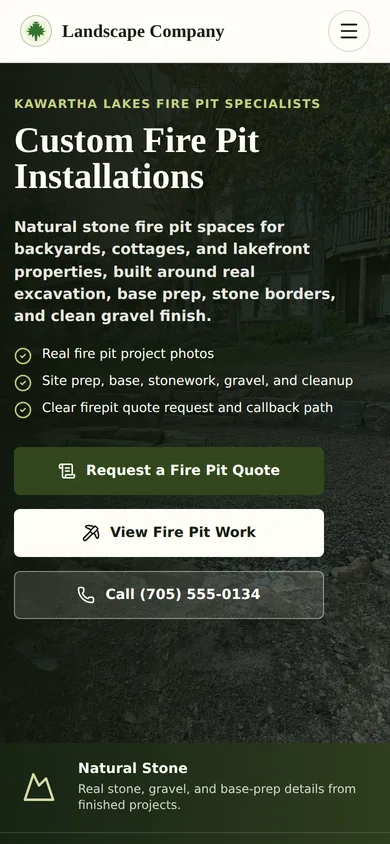 Open the fire-pit landing page
Supports Search setup, campaign-readiness reviews, and landing-page planning.
Peter J. Reynolds is Google Ads Search Certified.
The process
Start with the service intent, not the whole industry.
Quote-ready service searches usually belong on the focused service page.
Photos, process, objections, and trust signals should sit close to the CTA.
Calls, forms, thank-you pages, and lead-quality feedback matter more than raw clicks.
Start controlled with clear keywords, negatives, and search-term review before broader matching.
The difference
Risk: A visitor may need to keep searching after the click.
Why it works: The visitor sees the thing they searched for without hunting.
The Landscape demo model
Broad hardscape credibility
Focused landing-page proof
Education and doubt removal
Quote path
Plain answers
Sometimes. A focused Basic Page or landing page can work when the business only needs one clear destination. If the business needs multiple services, proof, and broader search structure, a Starter Site is usually a better fit.
Not always. If the current page already matches the search intent, shows the right proof, and makes contact easy, it may be usable. If the page is vague, slow, broad, or hard to act on, the landing page should be fixed before spend increases.
Yes, but the landing page and campaign setup are scoped separately. The page can handle message match, proof, CTA flow, and tracking-readiness notes; campaign setup can cover Search structure, keyword control, negatives, and conversion handoff where needed.
No. Synapse can build the page and help with readiness, but paid-search outcomes depend on campaign, market, budget, offer, follow-up, tracking, and other factors outside the page.
Send the current website or page, Google Business Profile, service notes, service area, photos or proof if available, the offer you want to advertise, and the action you want visitors to take.
No. It is a noindex Synapse demo used to show landing-page structure, proof placement, and quote-path thinking. It is not presented as a real contractor, client, or performance result.
Ready to build a better path?
Send the current site, Google profile, service notes, or business basics. Peter will point you toward the smallest useful path: a focused page, a service-page upgrade, or a campaign-readiness review.